
Research partnership · November 2026
Carents x IMPACT: what carents told us about caring for an ageing parent
Many people supporting an ageing parent don't see themselves as carers. Over the past year, we worked with IMPACT (Improving Adult Care Together) and carents across England to understand why, and what would make it easier.
This page sets out what they told us, and the free guides and films they created to make life easier for future carents.
IMPACT is the UK centre for implementing evidence in adult social care, funded by the Economic and Social Research Council and The Health Foundation.
48
carents aged 40 to 80 took part
12 months
of research, hosted by Carents in 2025/26
4
free resources, made with carents
The key finding · Carers Rights Day 2026
Someone you know is a carent. Do they know it yet?
For many people, helping a parent doesn't feel like caring. It feels like being a son or daughter. It often starts with the shopping or an appointment and grows from there, so many carents don't recognise their role until they reach a crisis.
"Carer" doesn't always fit either. If you're managing a parent's life from a distance, it's easy to feel it doesn't count. Many felt "carent" described their lives better, even if they'd never heard the word.
"Although I don't live with them full time, I have full-time anxiety."
A carent in the project
What carents told us
Six themes came through in every conversation and workshop.
Theme 1
Every carent's experience is different
Some live with a parent and support them around the clock. Others care from a distance while working or raising children. If a parent moves into a care home, the responsibility changes rather than ends.
Theme 2
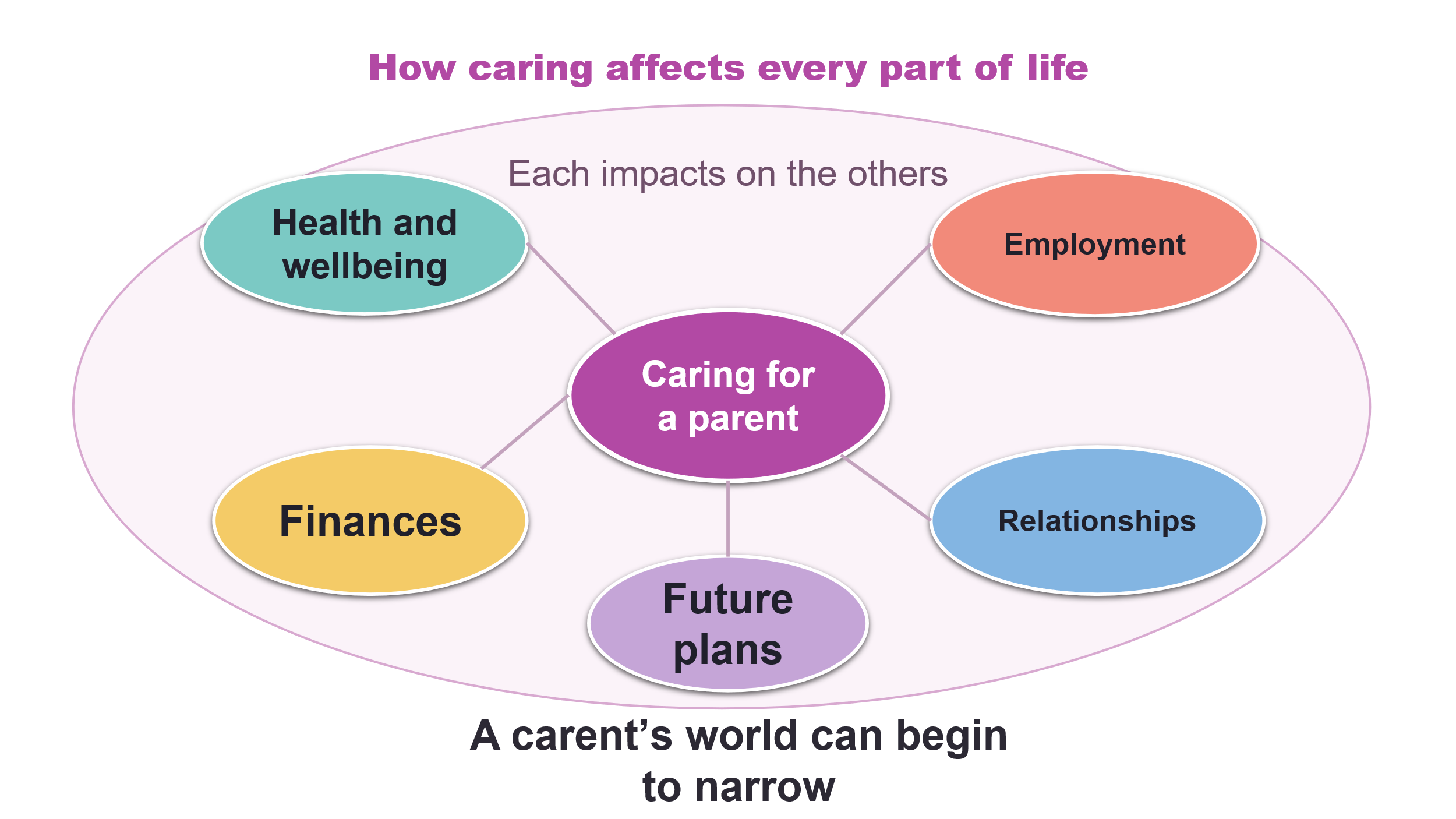
It affects every part of life
If you're exhausted, work becomes harder. If you work less, money gets tighter. With less time and money for the things you enjoy, your world can start to shrink.
Theme 3
"Carent" can be a better fit
Some were happy with "carer". For many others it didn't feel right, because they saw their relationship with their parent differently.
Theme 4
Six things help
People, work, services, information, personal space and recognition: families who share the load, employers who make room for the unexpected, and clear information before a crisis.
Theme 5
Some things make it harder
Services that don't talk to each other, long waits, hospital discharge before support is ready, and information that feels like "doing a puzzle".
Theme 6
Carents have advice for the next person
Start early on powers of attorney, wills and future care. Ask questions and challenge decisions. Build a support network, and look after yourself.
Source: Improving Support for Adults Caring for Older Parents, IMPACT Facilitator Project 2025/26 summary report (Marlene Kelly, October 2026)
How caring affects every part of life
Health, work, money, relationships and future plans are all linked. Carents described how pressure in one area spills into the others, until it can feel as if your life is no longer your own.
Free resources, made with carents
Practical, honest and written by people who've been there. The guides are free: fill in a short form and we'll email them to you.
Guide · For carents
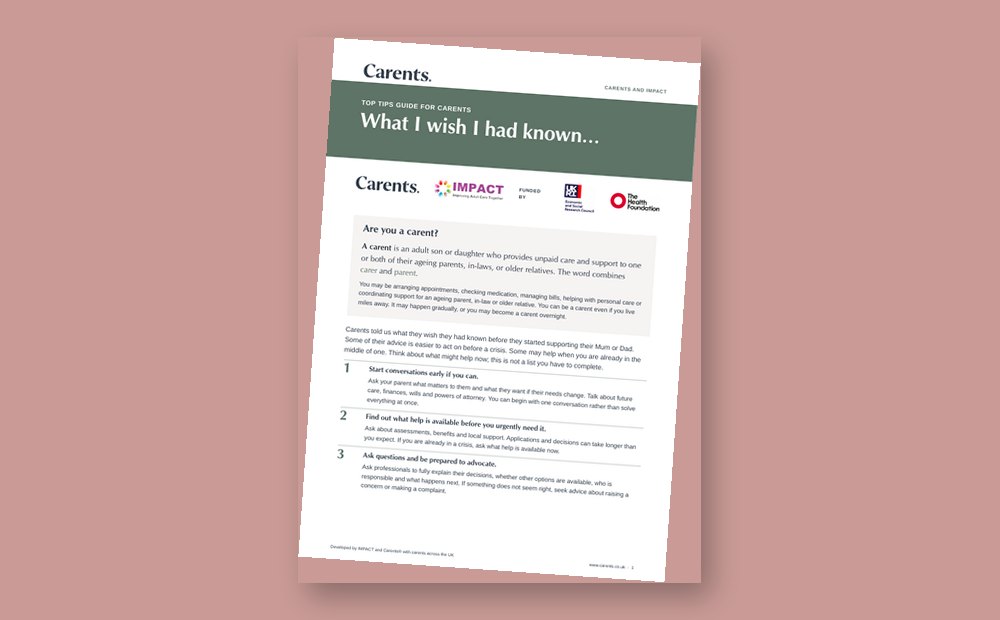
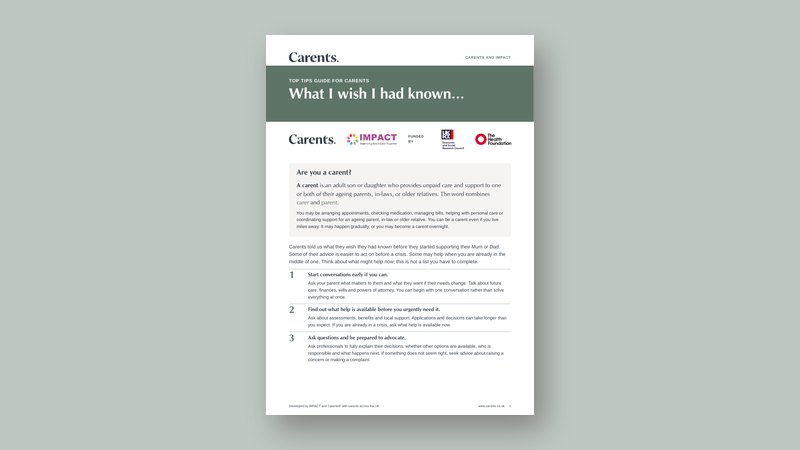
Top Tips for Carents: What I wish I had known
PDF, 2 pages
Ten pieces of honest advice from carents who've been there, from starting conversations early to the things nobody likes to talk about.
Get the guide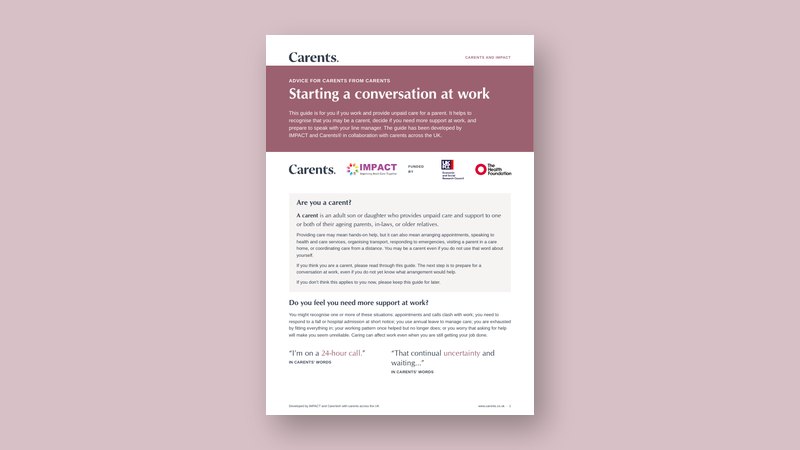
Guide · For carents in work
Starting a conversation at work
PDF, 2 pages
How to prepare to talk to your manager about caring, what to ask for, and example words you can use.
Get the guide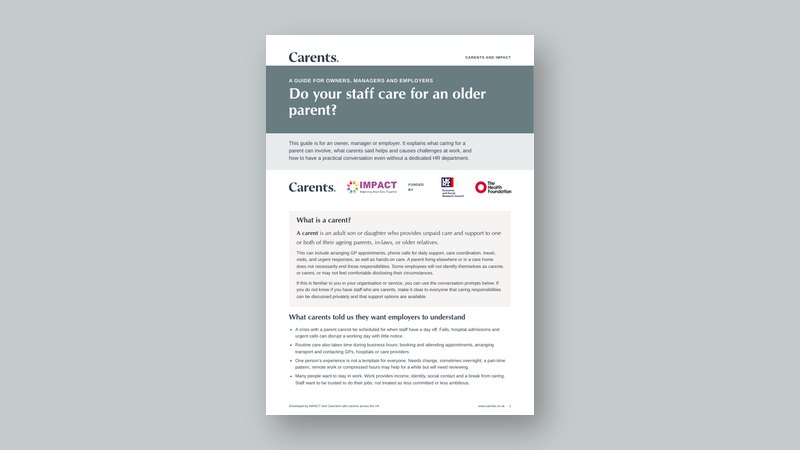
Guide · For employers
Supporting employees who care for a parent
PDF, 3 pages
For owners, managers and HR, especially in smaller businesses: what to ask, what helps and what to avoid.
Get the guide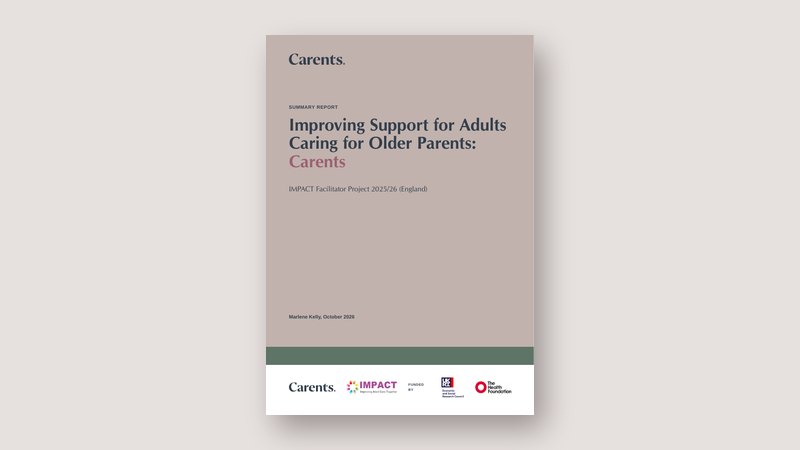
Report · October 2026
Improving Support for Adults Caring for Older Parents
Based on 48 carents · PDF, 13 pages
The full findings, and what they mean for health, social care, employers and policy.
Get the report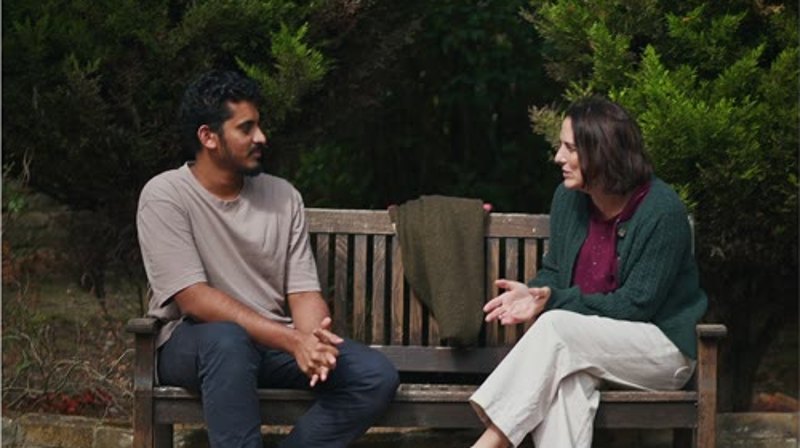
Films · For everyone
Four short films
Every word spoken by a carent
What is a carent? How to support a carent. What I wish I had known. Conversations before a crisis.
Watch the films
Blog · November 2026
Someone you know is a carent. Do they know it yet?
5-minute read
Why so many people supporting a parent don't see it, and the signs you might be a carent.
Read the blogGet the guides
Tell us where to send them and they'll be in your inbox in a few minutes.
If you're supporting a parent
All four guides, free
We'll email you all four guides, including one to pass on to your manager. You'll also join the Carents community list for free guidance and support. You can unsubscribe at any time.
If you manage people
The guide for managers
We'll email you Supporting employees who care for a parent, plus the work guide to share with your staff and the full report. You'll also join our mailing list. You can unsubscribe at any time.
How we did it
The evidence
A review of research from 2015 to 2025 on what carents face and what helps, plus a second review in February 2026 on how smaller employers support staff who care.
Listening
Between May and July 2026, 48 carents took part in one-to-one conversations and workshops. Half came through Carents and half through local organisations supporting unpaid carers. Around 40% were men.
Making it together
Twelve carents co-produced the guides and films. Seven Carents team members with lived experience, and a project buddy from IMPACT who cared for her mother, shaped the work throughout.
Where to start
Carents
Start with Top Tips. If work is getting harder, add Starting a conversation at work.
Get Top TipsEmployers
Someone in your team is probably a carent, and they may not know it yet. The manager guide shows how to start the conversation.
Get the manager guideHealth, care and policy
The report calls for raising awareness of carents early, practical support to stay in work, and using the word "carent" in public information and policy.
Get the reportIn carents' words
"Hearing from other people who are caring was helpful — it made me realise it isn't just me."
"Nobody told me at the beginning that I was just as important."
"Do with, not for."
Thank you to every carent who shared something so personal so the next person would find it easier, to Marlene Kelly, the IMPACT Facilitator who led the project, and the IMPACT team, and to the local organisations that helped us reach carents across England.

 Funded by


Someone you know is a carent
If this sounds like your life, you're not on your own. If it sounds like someone you know, send them this page.
Did you find this information helpful? Let us know what you think or pass on some advice to other carents by emailing us at hello@thecarentsroom.com