

Every day, millions of adults in the UK are caring for an ageing parent or elderly relative. They manage medications, attend appointments, navigate systems, absorb the weight of watching someone decline, and hold households together across two addresses. Most do it without pay, without formal recognition and while being told it is just what you do.
This report is about what that costs.
The Hidden Toll draws on the responses of 4,293 adults supporting their ageing parents across the UK, surveyed between January and March 2026. It is the most detailed picture yet taken of the lived experience of carenting in Britain today.
Alongside it, a separate survey of 2,000 members of the general public, conducted by Opinion Matters in May 2026, reveals how the rest of society sees this stage of life and why so little is said about it.
What the numbers say
Say they are always on alert, even when not physically present with the person they care for
Say the support system only reacts when things reach crisis point
Say society treats caring for a parent as "just what you do"
Receive less sympathy and recognition than new parents
Of the general public say there should be more support for carents
Carents contributed to this research
Email Your MP
What we found
Six themes run consistently through the data.
1. Most carents are not talking about what they are carrying
60% downplay their caring role in social situations. 62% feel guilty asking for help. 56% feel ashamed admitting that caring is hard.
This is not because they have nothing to say. Many have learned, through experience, that being honest will cost them more than staying silent. The fear behind the silence is specific and consistent: fear of being judged as weak, fear of burdening the people around them, and fear of responses already received or already predictable.
"People ask how you are or how it's going but don't really want to hear how hard it ACTUALLY is or what caring for someone full time ACTUALLY entails. So it's just easier to say I'm fine."
2. Caring for a parent is treated as "just what you do"
81% say society treats their caring role as something that does not deserve support. 80% feel the world expects them to cope without help because they are family. The phrase appears across thousands of responses, said by friends, relatives, colleagues, employers, and professionals alike.
"I downplay my role as I feel guilty because society expects me to do it regardless."
3. Speaking out leads to dismissal
93% of carents report receiving a dismissive or unhelpful response when they talked about their caring experience. The most common responses include "she's your mum, it's only family," "just get on with it," and "at least you still have them." Dismissal comes from every direction: from family, from employers, and from health and care professionals.
4. Carents are always on
96% say they are always on alert, even when not physically present with the person they care for. This is not a figure about individual anxiety. It is a description of what the role requires: permanent hypervigilance, sustained across months and years, with no clear end point.
"Never off my mind. Always waiting for a response from the alarm system. I can never really relax. I doubt I can cope with any further issues, and there are always more issues."
5. Carenthood is measured against parenthood and found lacking
75% of carents say they receive less sympathy and recognition than new parents. 52% say caring for a parent feels like a taboo topic compared with having a baby. A separate survey of 2,000 members of the general public found that only 13% see caring for an ageing parent as one of life's biggest transitions, compared with 56% who say the same about becoming a parent.
6. The system leaves carents invisible and unsupported
Carents in the survey consistently report feeling invisible, lonely and unsupported. 89% say the support system only reacts when things reach crisis point. The gap left by formal services is compounded by family, friends, and employers who don't understand.
"I've become invisible, lonely, exhausted, broken."
What needs to change
Carents is calling on government, employers, and health services to take six specific steps.
1. Name carenthood as a distinct life stage
Policy, employers, and health services should treat caring for an ageing parent as a defined life stage, equivalent in significance to early parenthood, with equivalent entitlement to recognition and support.
2. Change the cultural story
The "just what you do" expectation requires a sustained public conversation: one that names the cost honestly, removes the stigma from struggling, and extends to adult caring the social permission to ask for help.
3. Fund research into carenthood
This survey is the most detailed picture yet taken of the lived experience of carenting in the UK. Systematic, ongoing measurement of the hidden toll is essential to making the case for change and holding institutions to account.
4. Extend workplace protections
The Carer's Leave Act 2023 was a beginning, not a solution. 73% of employed carents say workplaces support new parents more than people caring for ageing parents. Genuine flexibility, explicit recognition of carenting alongside parental responsibilities, and removal of the professional risk around disclosure are all required.
5. Stop waiting for crisis
89% of carents say the system only responds once things have broken down. Proactive assessment, early intervention, consistent support from the start of a caring journey, and a named single point of contact for every carent navigating the system are all achievable and overdue.
6. Recognise and address the mental toll
Mental health support for carents must go beyond crisis intervention. 96% of carents say they are always on alert, many are exhausted, lonely and at breaking point. It requires specific, accessible support that acknowledges the psychological reality of carenting, not just its practical demands.
-
Integrate mental health support for carents as standard practice
-
Recognise hypervigilance, burnout and identity loss as core risks
Download The Hidden Toll
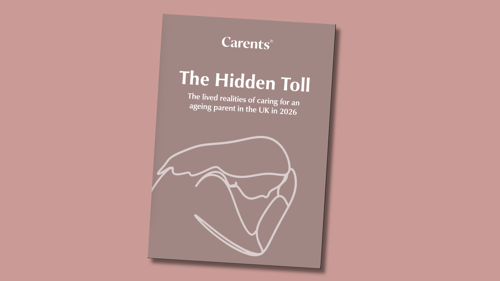
For the full picture of what carents told us, download the full report of The Hidden Toll.
Simply fill in your details and the report will be sent to you.
About this research
The Hidden Toll is Carents' largest survey to date, covering 4,293 adults caring for ageing parents across the UK, conducted January to March 2026. Three respondent groups are represented: 2,016 caring for a parent with dementia, 967 in paid employment alongside caring, and 1,310 in all other circumstances.
A complementary general public survey of 2,000 UK adults (nationally representative) was conducted by Opinion Matters between 26 and 28 May 2026. More on this research can be found here.
Full methodology is available on request. Contact hello@carents.co.uk
Did you find this information helpful? Let us know what you think or pass on some advice to other carents by emailing us at hello@thecarentsroom.com
Last updated: 14/08/2026