

Reviewed by: Dr Jackie Gray, Public Health Expert and Retired GP
(Carents Trusted Reviewer Programme – Last reviewed January 2026)
On this page:
- Emotions are an essential
- Why carenting is so emotional
- The Change Curve
- What emotional overwhelm looks like when you are a carer
- Practical emotional self care for carents
- Coping with guilt when you are caring for an older parent
- Facing difficult feelings when you are a carent
- How to decide what to do with strong emotions
- Tools that help carents process and manage emotions
- Spotting early signs of emotional burnout
- Small ways to soothe yourself when emotions feel too big
- When emotional strain affects your mental wellbeing
- Frequently Asked Questions
Emotions are an essential part of being human
We all move through many emotions each day, guilt, joy, sadness, anger, anxiety. Some pass quickly. Others hang around. Some feel good and some feel heavy.
Whatever they are, emotions are a normal part of being human. They help us make sense of what is happening around us.
Much of our emotional wiring comes from thousands of years ago when humans had to react fast to danger. When something felt threatening, the body released chemicals like adrenaline and cortisol to push us to act, to run, fight or hold our ground.
Life looks very different now, but our bodies still react in the same way. Stress hormones surge when something feels uncertain or risky. They can make us feel angry, jumpy, low or on edge.
Why carenting feels so emotional and overwhelming
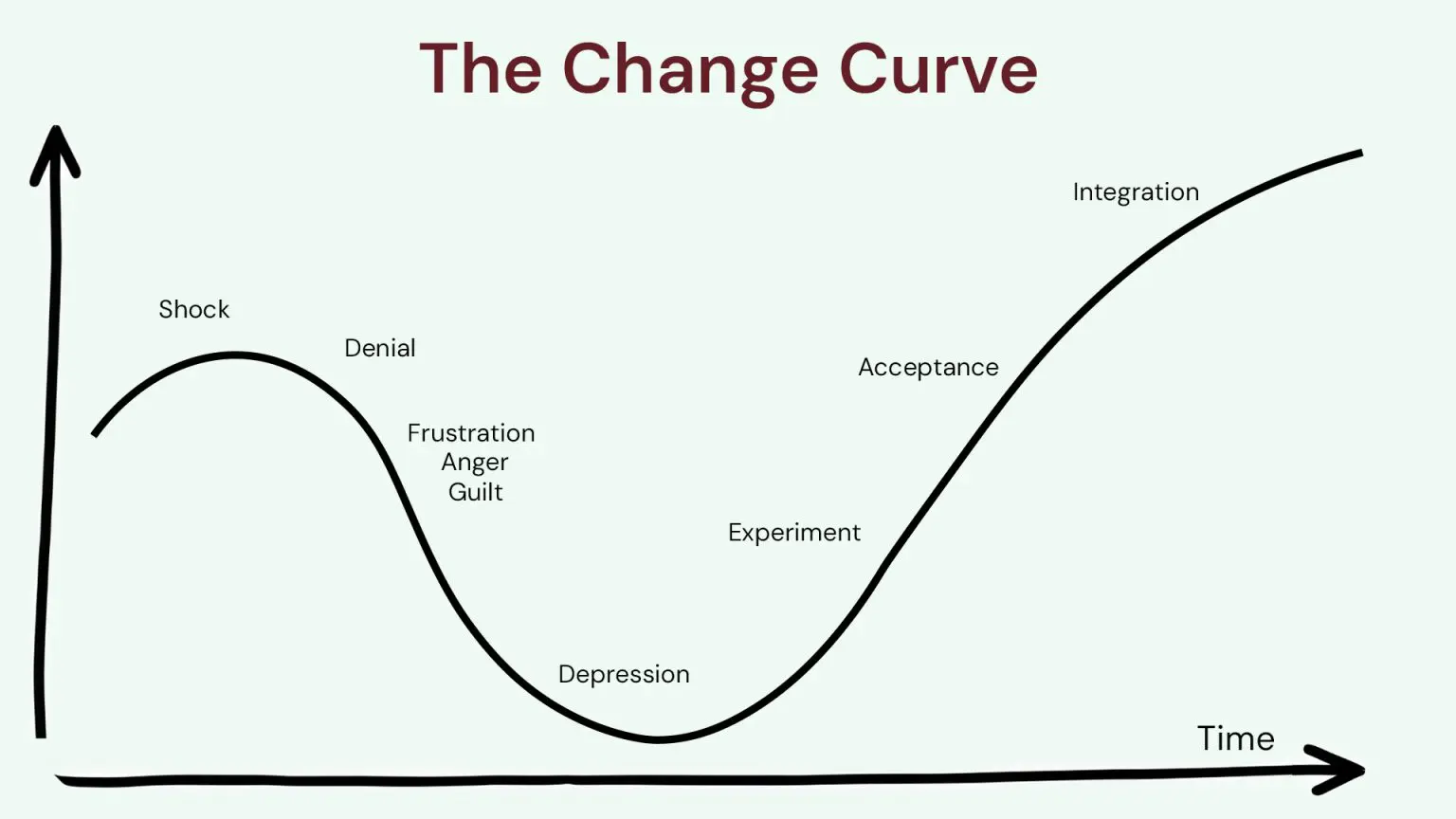
Big life changes, like becoming a carent, bring a mix of emotions that can feel messy and conflicting. The pattern often mirrors what we see in grief and loss. Elizabeth Kübler Ross first mapped this emotional curve. Since then it has been seen in all sorts of situations where life shifts suddenly.
The stages are not neat. Feelings come and go. But during change we move through shock, frustration, sadness and, eventually, a kind of acceptance. Caring for an older parent involves ongoing losses and constant adjustment. No wonder it can feel like emotional whiplash, suddenly dropping one day and lifting the next.
What emotional overwhelm looks like when you are a carer
Emotional overwhelm is common for carers but often goes unnoticed because it builds slowly. You may find yourself snapping at small things or feeling blank and checked out. You might feel constantly tense, as if you are waiting for the next crisis.
Overwhelm also shows up as forgetfulness, trouble concentrating or feeling guilty for not coping better. None of these reactions mean you are weak. They mean you have been carrying too much for too long.
Carenting often involves juggling appointments, crises, worry, paperwork and family dynamics. Anyone would struggle under that load. Naming overwhelm helps you take it seriously. It also helps you plan small changes, like asking for help, taking micro breaks or lowering expectations on tough days.
Practical emotional self care for carents
How we respond to our feelings shapes how we cope. When stress hormones build up, everything can feel sharper. We may judge situations too quickly, feel attacked when no one meant harm or get stuck seeing things as all good or all bad. We may react before we pause to think, or rely on feelings instead of facts.
A steady stream of stress wears us down. It drains energy and makes small tasks feel huge.
The good news is we can learn to work with our emotions rather than be pushed around by them. What helps will look different for each person.
Coping with guilt when you are caring for an older parent
Guilt is one of the most common emotions carents talk about. You may feel guilty for losing patience, for not visiting enough, for wanting time alone or for wishing the situation were easier. Some people feel guilty for putting boundaries in place, even when those boundaries protect their wellbeing. Guilt often appears because we hold ourselves to impossible standards.
Caring for someone you love while managing your own life is not simple or tidy. You cannot meet every need. No one can. Guilt becomes easier to handle when you see it as a signal, not a verdict. It might be pointing to exhaustion, fear or sadness underneath. Sharing your guilt with someone you trust can help shrink it. So can reminding yourself of the care you already give daily.
Facing difficult feelings when you are a carent
Many of us were taught to keep going, keep quiet and not make a fuss. But burying emotions does not make them disappear. They tend to leak out later, sometimes as irritability, withdrawal or tears we did not expect.
Research suggests suppressing emotions can harm our physical and mental health. Facing feelings, naming them and giving them space helps us feel more in control. It also helps us respond to situations instead of reacting automatically.
It is normal not to know exactly what you are feeling. Emotions mix together. They show up in the body before we have words for them. Historian Tiffany Watt Smith explains this complexity in her TED talk.
How to decide what to do with strong emotions
Once you understand what has triggered a feeling, you can decide what to do with it.
Sometimes the best response is to pause and do nothing. Accepting a situation for what it is does not mean you like it or have to tolerate it forever. It simply gives you space to choose your next step rather than rush into action.
Psychologist Susan David describes the value of noticing and naming emotions in her TED talk. A note that the talk includes discussion of grief and death.
Tools that help carents process and manage emotions
Meditation and mindfulness
These practices help you notice what is happening inside you without getting swept away by it. Even a minute of slow breathing can lower tension.
Active relaxation and movement
Simple body techniques like slow breathing, gentle stretching or tensing and relaxing different muscle groups can release some of the physical pressure that strong feelings create.
Connecting with others
Humans steady each other. Talking things through with someone you trust can help you feel less alone and less overwhelmed.
Do more things you enjoy
Balancing negative emotions with moments of pleasure or pride matters. This is not about pretending everything is fine. It is about letting positive experiences register in your body and mind.
Hobbies, small achievements, laughter, or time with people who lift you can all help.
You can also use photos, journaling or scrapbooks to help you notice and appreciate what is still good or comforting in your life.
Helping others can also lift your mood. As a carent, you already give a great deal. That care has value.
Spotting early signs of emotional burnout
Burnout is not sudden. It builds through months or years of emotional strain. Carents often miss the signs because they are focused on keeping someone else safe. Early signs include feeling nothing at all where you would normally feel something, struggling to make simple decisions, or feeling constantly irritated. You may lose interest in things you used to enjoy. Sleep can get worse. You may feel trapped or hopeless even when nothing dramatic has happened. These are warnings, not failures.
Burnout means your emotional system has been running on empty. Small steps help at first, such as reducing the nonessential tasks you take on, sharing responsibilities, or giving yourself permission to rest. If burnout is already deep, professional help is important.
Small ways to soothe yourself when emotions feel too big
When feelings become overwhelming, shifting your attention to your senses can help.
You might try:
-
a warm drink
-
a scent you enjoy
-
a soft blanket
-
calming music
-
stepping outside for fresh air
Experiment to see what genuinely soothes you. Over time you learn what your body responds to.
Most importantly, do not add extra pressure to a life that is already full. Be gentle with yourself.
When emotional strain affects your mental wellbeing
Emotions, thoughts and actions feed into each other. This article focuses on the emotional side of caring, but if you have an existing mental illness, talk with your specialist team about what support you need.
If strong emotions like grief, anger or anxiety are becoming constant or unmanageable, please seek help. Talk to your GP, NHS 111 or consider NHS Talking Therapies. Charities such as Mind, Samaritans, Calm or Shout can also offer support.
Frequently Asked Questions
WHAT OUR CARENTS SAY
Reviewed by Dr Jackie Gray, January 2026
Keep in touch with Carents
Sign up to our newsletter and get access to all of our helpful tools and resources to support you and your parents on your carenting journey